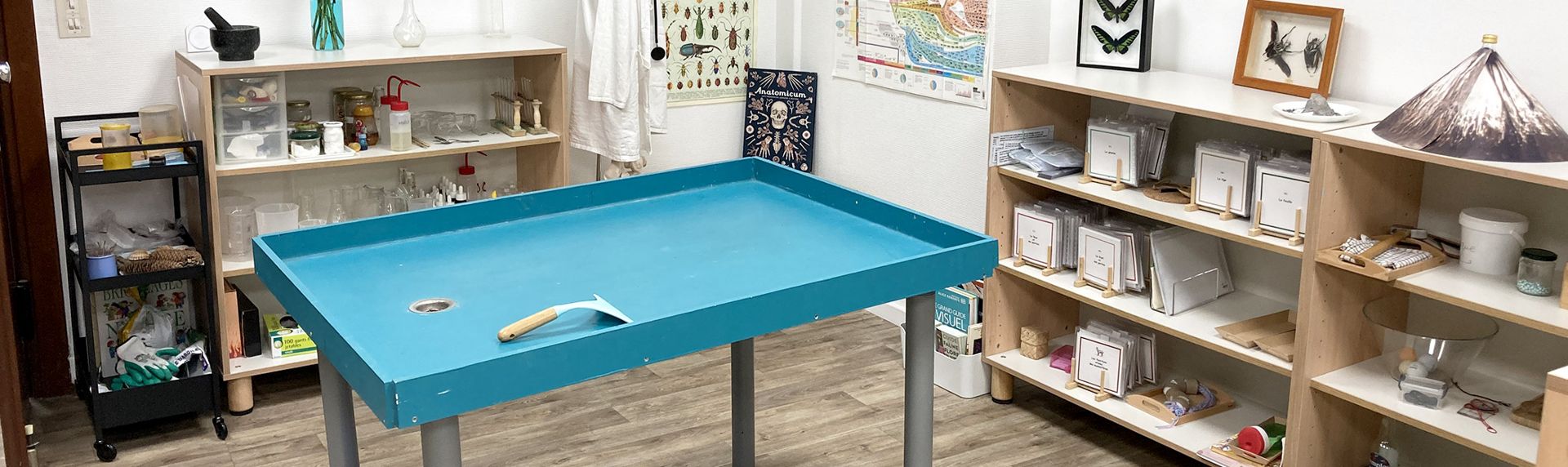
In the classroom
- An AMI-trained Montessori guide
- A long, uninterrupted work period
- Mixed-age groups
- A prepared environment
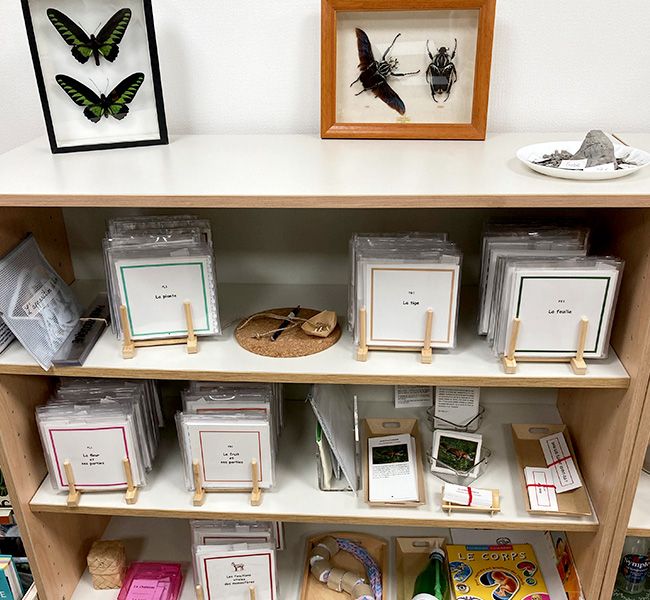
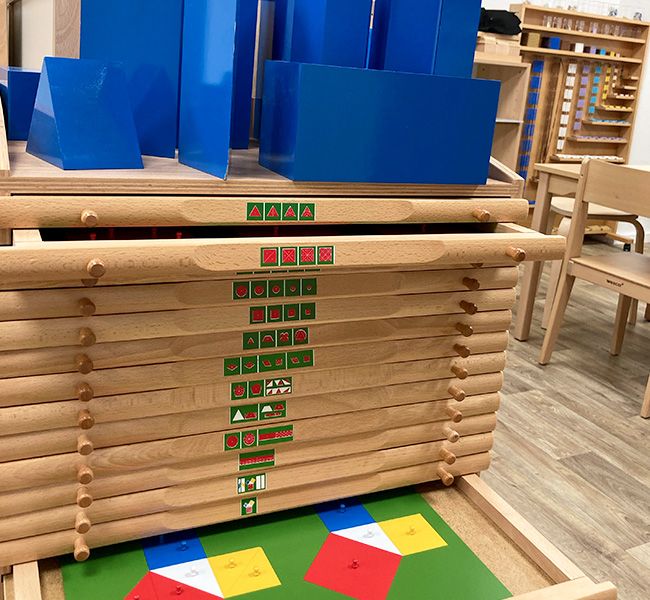
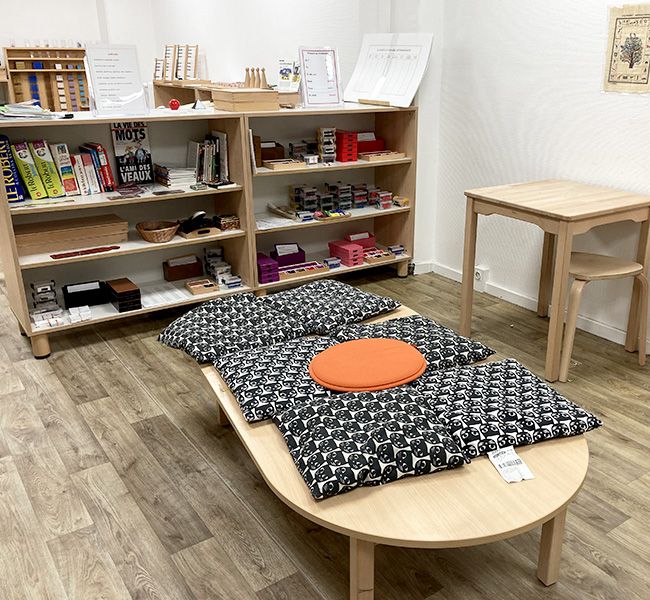
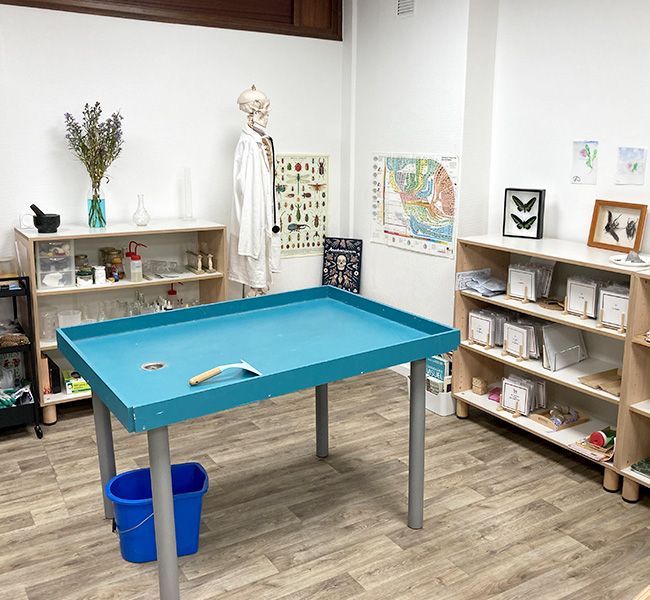
The complete set of AMI-approved 6-12 materials.
The areas of the classroom
The language area
Language
Spoken and written language matter enormously at elementary level. As children enter their second plane of development, they move beyond the individual self of their early years (0-6) and forge their social personality. Language is the means of communication for the social being they are becoming: a pyramid of the mind, an expression of the self, and the thread of the soul that weaves a web between people.
The mathematics and geometry area
Mathematics and geometry
The mathematical mind is one of the human tendencies that stay with us throughout our lives. Geometry and mathematics are everywhere: in spiders’ webs, in the cells of a honeycomb, in the bilateral symmetry of butterflies, in musical notes, and in art, with its measurements and the composition of works…
Learning mathematics and geometry comes easily in a Montessori setting, because we first approach them through the senses; then, thanks to their reasoning mind and imagination, children aged 6 to 12 move naturally towards abstraction and come to understand how mathematics works.
The biology area
Biology (from the Greek: the study of life)
For Maria Montessori, biology begins outdoors: observing nature and its balance, understanding how it works, making connections.
Biology brings out a characteristic of the reasoning mind through the classification of the kingdoms (plants, animals, fungi, archaea and bacteria). We work from the simplest to the most complex. The study of the human body is part of this programme, which concludes with ecology and interdependence.
The geography area
Geography
In a Montessori classroom, geography encompasses all the sciences: physics, chemistry, astronomy, geology, mineralogy and meteorology.
From the age of six, children show a keen interest in understanding how the universe works. Their powers of abstraction, observation, reasoning and exploration allow them to grasp what they cannot see. That is why it is important to explore many different fields, so that they can later make connections between them.
The history area
History
History is a way of knowing ourselves and discovering cultural practices. It highlights human values and reveals the greatness of human inventiveness. History helps children define who they are and see how they are similar to and different from others; it deepens their understanding because it connects to every other area (language, art, mathematics, geometry…).
The music and art area
Music and art
Art is the voice of the imagination, the expression of creativity. It develops certain cognitive skills and connects children to their heritage and culture. It allows children to express what they like and dislike. For Maria Montessori, art is the ability to see the reality of shapes, colours and proportions, and the mastery of movement.
Music is treated as a language and given the same consideration as every other subject.
Finding the entrance
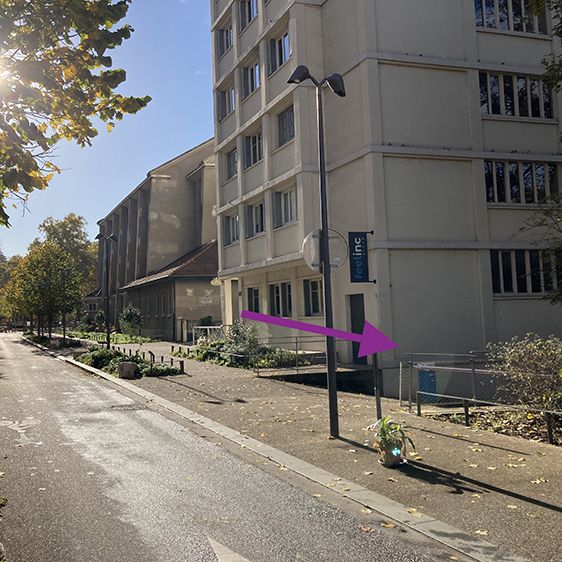
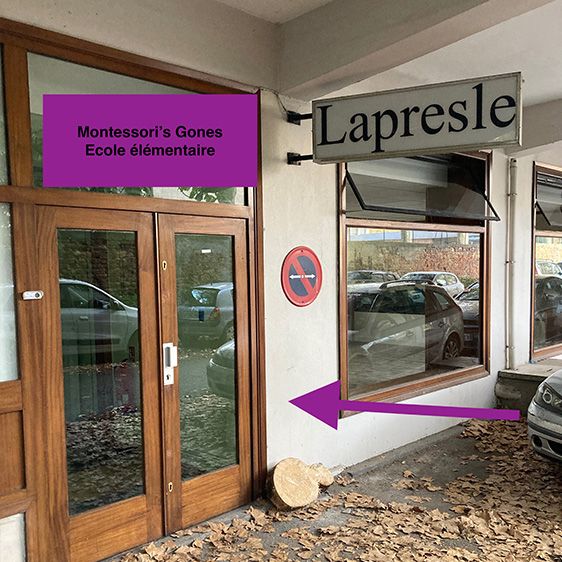
Find us at 7, avenue de Birmingham
The elementary class is in Lyon 4e. Visits are by appointment.